
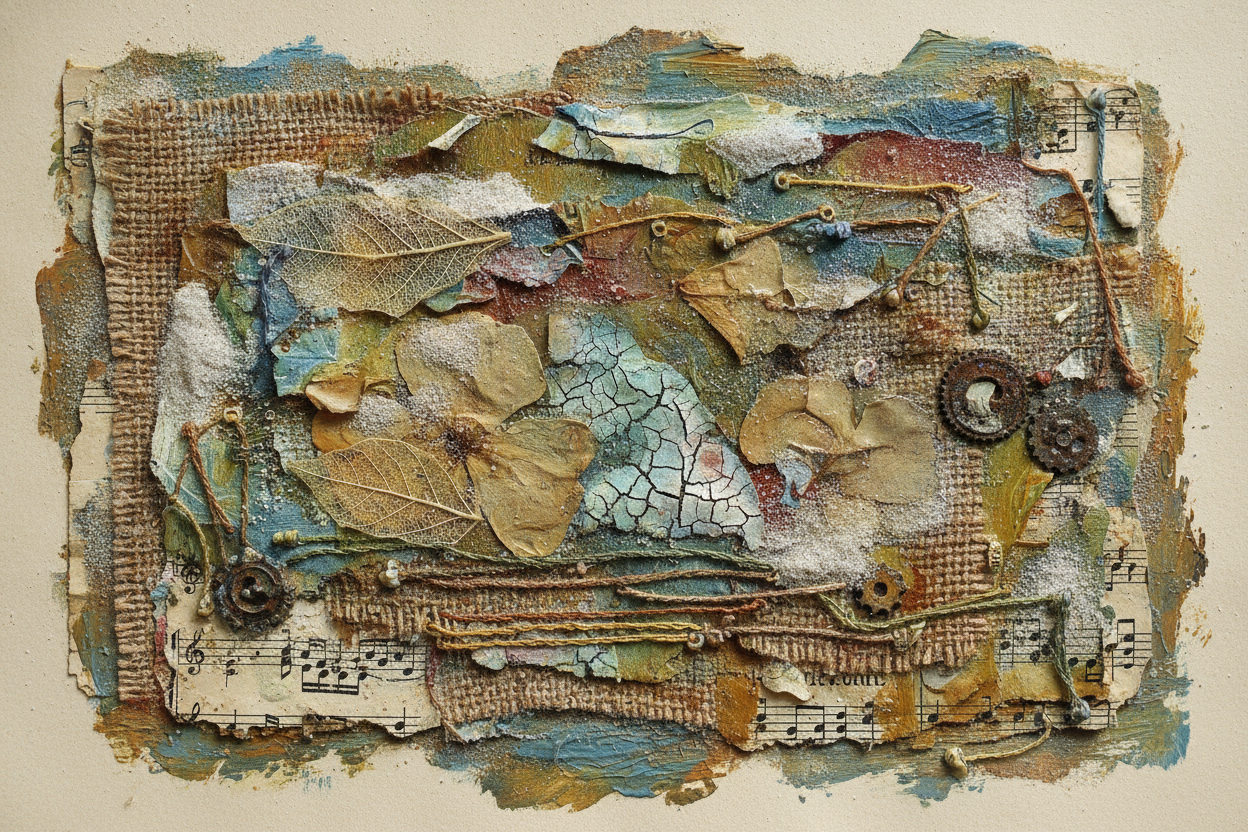
Texture is what gives mixed media art its richness. Even simple materials can look exciting when they create contrast in surface, thickness, or finish. The beauty of mixed media is that there are no strict rules about what belongs together. Paper, fabric, ink, paint, string, and found objects can all work in the same piece if they are placed with intention.
One of the easiest ways to build texture is through layering. Start with a base, then add thin and thick materials on top so the surface develops depth over time. Torn edges, stitched lines, and rough brushwork all add visual movement. The key is to vary the marks so the piece does not feel flat.
You can also use texture to create contrast within the composition. A smooth area beside a rough one draws attention immediately. Likewise, matte and glossy surfaces behave differently under light, which makes the piece more dynamic. When a work needs more energy, texture often solves the problem faster than adding more color.
Mixed media encourages play, but it also rewards patience. Let each layer dry or settle before adding the next when possible. That keeps the surfaces distinct and prevents the work from becoming muddy. With practice, texture becomes one of your most powerful tools for making art that feels tactile, lively, and full of character.
Leave a Reply