
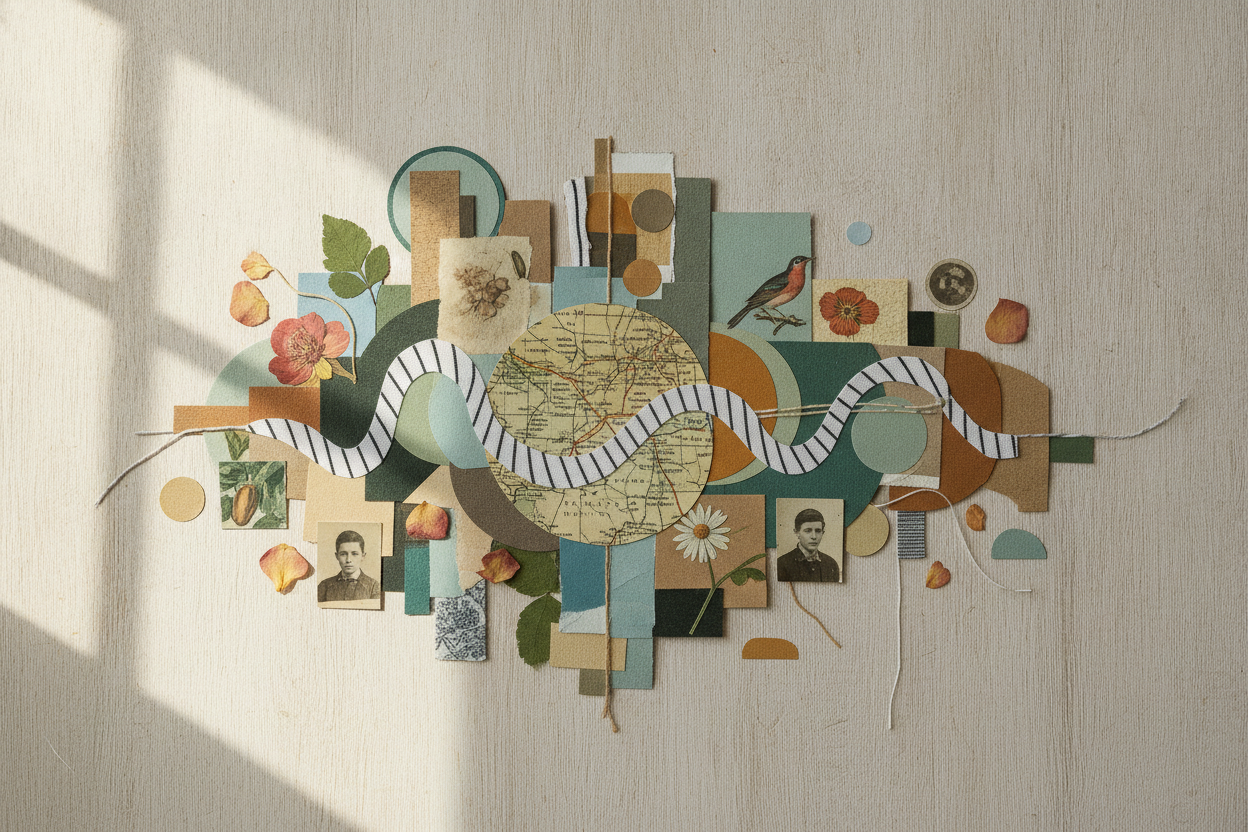
Collage is one of the most forgiving art forms, which makes it perfect for experimentation. You can combine paper scraps, magazines, photographs, paint, and found objects without needing every element to match exactly. The challenge is not collecting materials; it is arranging them in a way that feels intentional. Good composition turns a pile of fragments into a unified piece.
A useful starting point is to decide where the visual center should be. It does not have to sit in the middle, but the viewer should know where to look first. From there, build supporting shapes and textures around that focal area. Repeating a color or shape in more than one place can create a sense of rhythm and guide the eye through the work.
Spacing matters as much as the materials themselves. If everything is crowded together, the piece can feel heavy. Leaving open areas gives the composition breathing room and makes each layer more noticeable. Try moving pieces around before gluing anything down. A small shift can improve the whole design.
Collage also works well when you mix structure and surprise. Pair sharp edges with torn paper, or place a bold image next to something very quiet. That contrast adds energy. The more you practice, the better you will become at noticing how shape, scale, and placement affect the mood of the piece. Collage rewards curiosity, and every experiment teaches something useful for the next one.
Leave a Reply