
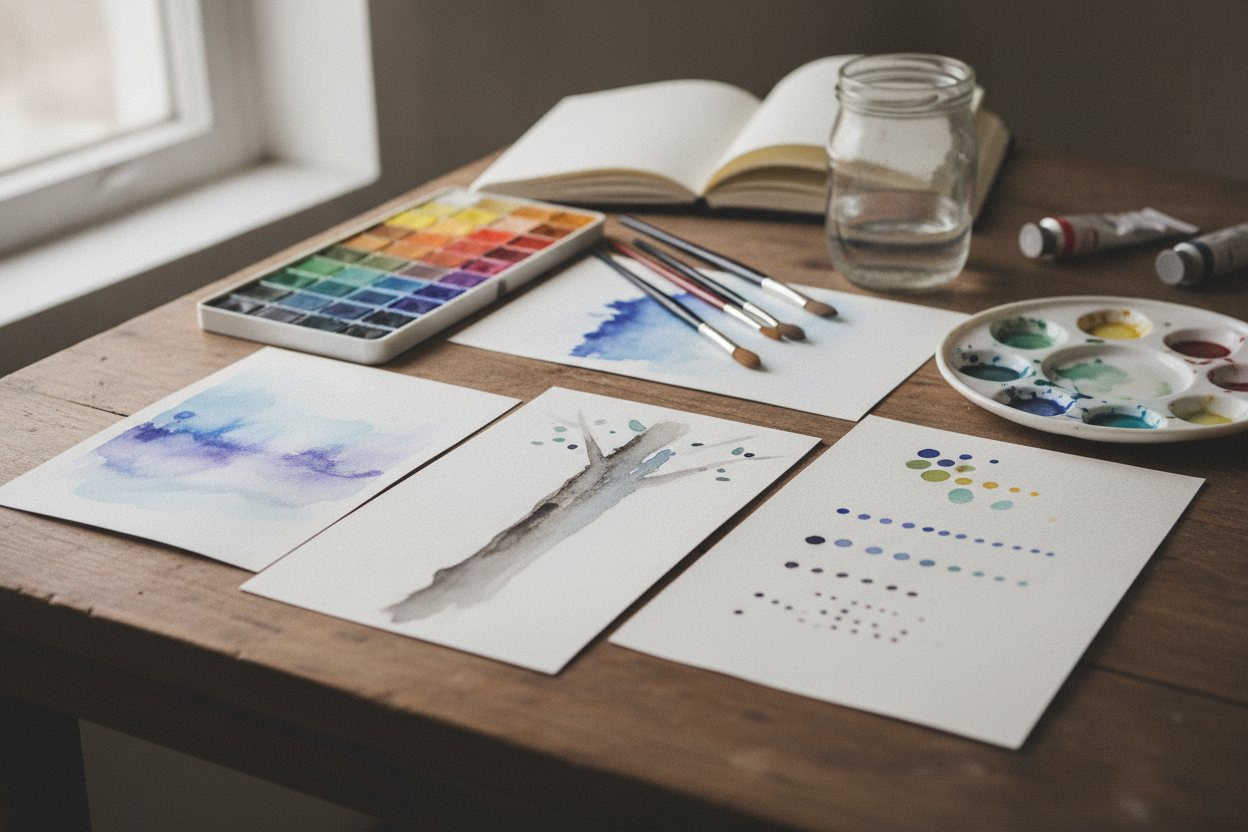
Watercolor can seem unpredictable, but that is part of its appeal. Once you understand a few basic techniques, the medium becomes much more approachable. Start with clean water, a small set of pigments, and good paper. These simple tools help the paint move in a way that feels controlled enough for beginners while still leaving room for happy accidents.
One of the first skills to practice is how much water to use. More water creates soft edges and lighter washes, while less water gives stronger color and sharper forms. Try painting the same shape several times with different amounts of water so you can see the difference clearly. This kind of repetition builds intuition quickly.
Layering is another useful watercolor habit. Let one wash dry before adding another, especially if you want depth or more defined shapes. If you work too quickly, colors may blend in ways you did not intend. That said, some blending is part of the charm, so do not be afraid to let the paint wander a little.
Simple subjects are the best place to begin. Leaves, fruit, shells, and abstract color fields all teach useful lessons without demanding perfect drawing skills. The more you practice, the easier it becomes to predict how the paint will behave. Watercolor basics are not about mastering every effect right away. They are about learning the language of the medium and enjoying the process as your confidence grows.
Leave a Reply